
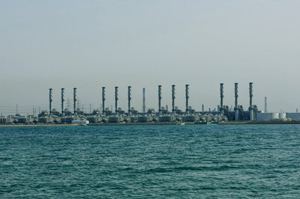
At first glance, Saudi Arabia’s Red Sea Project may appear to be a large-scale solar power development. However, the most interesting aspect begins when one looks beyond the power plant itself. In this project, electricity, water, cooling, wastewater treatment, and waste management were not designed as separate infrastructure projects. Instead, all of these services are delivered through an integrated infrastructure platform managed under a long-term concession agreement.
This model demonstrates that the next generation of energy companies may no longer focus solely on selling electricity or water. Rather, they may provide a comprehensive package of infrastructure services in an integrated, reliable, and long-term manner.
Located on Saudi Arabia’s western coast, approximately 65 kilometers north of Umluj, the Red Sea Project is being developed as a world-class tourism destination. To provide the required infrastructure services, Red Sea Global signed a 25-year agreement with a consortium led by ACWA Power. The scope of this agreement includes power generation, energy storage, desalination, wastewater treatment, district cooling, and waste management.
A Complete Destination Without Reliance on the National Grid
One of the project’s most significant features is that its energy system operates independently of the national electricity grid. Hotels, the Red Sea International Airport, logistics facilities, electric vehicle fleets, staff accommodation, and other project assets do not rely on Saudi Arabia’s national grid for their day-to-day electricity needs.
To supply this demand, the project includes approximately 340 MW of solar generation capacity and around 1,227 MWh of battery energy storage. Some technical project documents also cite a total installed solar capacity of 358 MW, with the difference largely attributable to varying approaches to reporting nominal versus operational capacity.
At full scale, the system is expected to generate approximately 760,000 MWh of clean electricity annually. According to ACWA Power estimates, it will also prevent the emission of around 600,000 tonnes of carbon dioxide each year. Importantly, however, nighttime electricity supply is not provided solely through the combination of solar generation and battery storage.
Why Solar and Batteries Alone Are Not Enough
Battery storage is a critical component of the system, but designing a fully independent 24-hour power network cannot be achieved simply by increasing battery capacity. Technical specifications indicate that, in addition to solar and battery systems, the project includes 112.5 MW of dispatchable generation based on controllable power engines fueled by B100 biofuel.
The presence of this component highlights that reliable power supply requires multiple layers working together:
- Solar generation to provide the majority of energy during daylight hours.
- Battery storage to shift energy to other periods and stabilize the network.
- Dispatchable generation to support the system when solar production or battery charge levels are insufficient to meet demand.
As a result, the central achievement of the Red Sea Project is not merely the installation of equipment, but the design of a balanced and reliable energy system.
A simple comparison illustrates the concept. A battery storage capacity of 1,227 MWh against 340 MW of solar capacity mathematically corresponds to approximately 3.6 hours of storage at full solar output. However, this does not mean the destination can only operate for 3.6 hours after sunset. Actual demand is significantly lower than the solar plant’s nominal capacity, batteries are continuously charged and discharged throughout the day, and the system has been designed around real consumption patterns.
Water: The Second Pillar of the Infrastructure System
Water represents another major component of the Red Sea Project’s integrated infrastructure. Three seawater reverse osmosis (SWRO) desalination plants provide a combined production capacity of 32,500 cubic meters of fresh water per day.
The water cycle, however, does not end at desalination. After consumption, wastewater is collected and treated. The project’s primary wastewater treatment facilities have a capacity of approximately 16,000 cubic meters per day, with part of the treatment process carried out through constructed wetlands. An additional treatment unit using Moving Bed Biofilm Reactor (MBBR) technology processes around 2,315 cubic meters per day.
The treated water is then reused for landscape irrigation, nurseries, and other non-potable applications. The project’s water cycle can therefore be summarized as follows:
Seawater
↓
Desalination
↓
Consumption
↓
Wastewater Collection
↓
Treatment
↓
Reuse
This approach transforms the project from a simple desalination facility into an integrated water management system.
Constructed Wetlands: Where Engineering Meets Nature
The use of constructed wetlands for wastewater treatment is among the project’s most noteworthy features. Rather than relying exclusively on mechanical and chemical treatment processes, this method utilizes natural systems—including soil, vegetation, and microorganisms—to purify water.
Such approaches are commonly categorized as nature-based solutions, aimed at reducing energy consumption while simultaneously delivering environmental benefits. Consequently, the Red Sea Project is not solely an engineering endeavor; it also seeks to combine conventional infrastructure with natural systems.
Cooling: Managing Demand Instead of Producing More Electricity
In Saudi Arabia’s hot climate, cooling represents one of the largest consumers of electricity. Rather than equipping each hotel or building with a standalone cooling system, the project has developed approximately 32,500 refrigeration tons of district cooling capacity.
District cooling involves producing chilled water at centralized facilities and distributing it through a network of pipes to multiple buildings. The primary advantage of this approach is that cooling can be managed at a larger scale and with greater efficiency.
From an energy planning perspective, this is highly significant. Instead of solving every challenge by expanding electricity generation capacity, part of the solution comes from reducing and optimizing demand. In simple terms, the project has not only asked, “How can we generate more electricity?” but also, “How can we use energy more intelligently so that additional generation is not required?”
Even Waste Is Part of the Same System
The project’s scope extends beyond power and water. Its solid waste management system is designed to process approximately 11,500 tonnes of waste annually. This further illustrates the project’s philosophy of integrated resource management.
Electricity, water, cooling, wastewater, and solid waste are not treated as isolated sectors; rather, they function as interconnected elements of a unified infrastructure system.
More Important Than Technology: The Business Model
The project’s appeal lies not only in its technology but also in its business model, which may be even more significant.
Red Sea Global did not choose to finance, own, and operate all of these infrastructure assets directly. Instead, the project was structured as a public-private partnership (PPP). A consortium led by ACWA Power assumed responsibility for financing, designing, constructing, and operating the infrastructure, while the destination developer committed to purchasing the required infrastructure services over a 25-year period.
In practice, the customer is not buying a power plant, battery system, desalination facility, or cooling equipment. Rather, it is purchasing an infrastructure service.
This distinction may appear subtle, but from a business-model perspective it is highly significant.
Conclusion
The Red Sea Project demonstrates that the future of energy companies may not simply be defined by building more power plants. In the emerging model, an energy company can move beyond being merely an electricity supplier and instead become responsible for designing and managing the customer’s entire critical infrastructure ecosystem.
Under this approach, electricity, water, and gas are no longer viewed as separate businesses. They become integrated components of a single solution designed to ensure operational continuity, infrastructure resilience, and long-term sustainability—an approach that holds particular relevance for large industrial sectors.