
A year of abundant rainfall does not necessarily mean the end of water scarcity. Water must fall at the right time, have the opportunity to infiltrate the ground, be stored in natural or artificial reservoirs, and ultimately reach end users with acceptable quality and cost. When any link in this chain is disrupted, the mere presence of water in nature no longer guarantees secure water supply.
The World Meteorological Organization’s (WMO) State of Global Water Resources 2025 report, published in September 2026, focuses precisely on this gap between precipitation and reliable water availability. Drawing on ground-based observations, satellite data, and hydrological models, the assessment examines rivers, groundwater, terrestrial water storage, snow, and glaciers. The result is a picture of a water cycle that, across many regions, is increasingly oscillating between severe scarcity and extreme abundance.
What Do Rivers Tell Us About 2025?
In terms of river flows, 2025 was one of the driest years within the 35-year period analyzed by the report. According to the State of Global Water Resources 2025, river flows were below normal across 36% of the world’s river basins. This figure is derived from the combined results of 13 global hydrological models calibrated against observed meteorological data, and it does not imply that 36% of the world’s rivers ran dry.
River flow refers to the volume of water passing through a river channel over a specified period. Reduced flows can constrain water withdrawals for cities, agriculture, and industry, while also limiting hydroelectric power generation. However, the impact of a similar decline varies significantly from one location to another. A city equipped with adequate storage capacity, reliable conveyance infrastructure, and effective demand management is far less vulnerable than a city dependent on a single river source.
More concerning than the condition of any single year is the persistence of the trend. The report shows that between 2019 and 2025, only about 34–38% of river basins experienced conditions close to their historical norm each year, compared with an average of nearly 46% during the 1991–2020 reference period. In other words, deviations from normal hydrological conditions are no longer rare or exceptional events.
Drought and Flood: Two Faces of the Same Challenge
The global water map is far from uniform. In 2025, parts of the Middle East, Central Asia, North America, and Eastern Europe experienced below-average river flows, while sections of South and Southeast Asia and northern South America recorded above-average flows. The report also highlights the recurrence of severe droughts and floods across various regions over the past five years.
At first glance, increased rainfall may seem beneficial. However, intense and short-duration precipitation often becomes runoff and flooding before water has sufficient time to infiltrate soils or replenish storage systems. Conversely, a gradual reduction in river flows may occur without generating major headlines, yet its effects on drinking water supplies, agriculture, and industrial production can accumulate over multiple seasons.
Nature’s Savings Account Is Shrinking
If rainfall and river flows are viewed as the current income of the water cycle, then groundwater, snow, ice, soil moisture, and water stored in lakes and reservoirs represent its savings account. These resources change more slowly and provide a critical buffer during dry periods. According to the WMO, total terrestrial water storage has shown a declining trend since the mid-2010s.
This does not mean that all regions are losing water at the same rate. Some areas have experienced above-normal storage levels, while others continue to face multi-year deficits. Yet at the global scale, the downward trend in water storage is a warning sign. A system with weakening reserves may have less resilience when confronted with future droughts.
Groundwater: A Resource That Cannot Be Replenished by a Single Rainfall Event
In 2025, nearly two-thirds of monitored groundwater wells recorded conditions outside their historical normal range, with the balance of change tilting more toward deficits than surpluses compared with the previous year.
Aquifers generally respond much more slowly to rainfall than rivers. Recharge requires water to move through surface layers and soils before reaching underground reservoirs—a process influenced by soil type, geology, land cover, and extraction rates. As a result, restoring a depleted aquifer can take far longer than the duration of a single dry season. For cities and industries that depend heavily on groundwater, understanding this time lag is critical for long-term water planning.
Glaciers: More Water Today, Less Security Tomorrow?
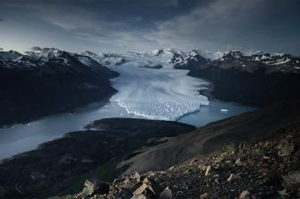
Another major long-term freshwater reserve is stored in glaciers. According to the report, glaciers worldwide lost approximately 1,400 billion tonnes of mass between 2023 and 2025. In the 2025 hydrological year alone, glacier mass loss was estimated at around 408 billion tonnes, with an uncertainty range of ±132 billion tonnes. This marked the fourth consecutive year in which all major glacier regions recorded a net loss of mass.
In the short term, glacier melt can increase river flows in certain regions. However, as glacier reserves shrink, their contribution to future water supply declines. Temporary increases in water availability due to melting therefore do not necessarily signal an improvement in water resources; they may simultaneously indicate the depletion of a critical long-term reserve.
Water and Industry
In practice, water and energy are not separate infrastructures. Hydropower depends directly on river flows. Many thermal power plants require substantial volumes of water for cooling. Conversely, desalination, wastewater treatment, and water pumping systems all depend on electricity. Disruptions in one system can quickly place pressure on the other.
For industrial facilities, the issue extends beyond possessing water abstraction permits or nominal treatment capacity. Decision-makers need to understand how much water of the required quality will actually be available during periods of scarcity, how dependent water delivery is on electricity, and what backup options exist if a primary source is disrupted. Answering these questions requires local data and realistic consumption scenarios; global statistics alone cannot determine the specific water risks facing an individual facility or watershed.
Conclusion: Water Security Means the Ability to Withstand Abnormal Years
The State of Global Water Resources 2025 report is not merely a description of a dry year. Rather, it points to changing patterns in the behavior of water systems: rivers that spend less time within their historical ranges, long-term water reserves that are steadily declining, and hydrological extremes that increasingly swing between drought and flood.
For industry and the broader economy, the implications are clear. Water security should not be measured solely by the volume of water available on a particular day or by annual average rainfall. The more meaningful indicator is how effectively a system can continue to function during abnormal conditions. Achieving this resilience requires a detailed understanding of water resources, effective demand management, water reuse and recycling, and the integrated planning of water and energy infrastructure.