
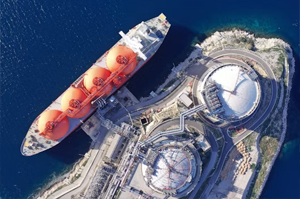
The first was the 2022–2023 crisis, when the sharp reduction in Russian pipeline gas flows to Europe triggered unprecedented price spikes and a major reconfiguration of global LNG trade. The second came with the 2026 Middle East crisis, during which disruptions to LNG shipments through the Strait of Hormuz once again demonstrated how a regional shock can rapidly affect gas markets in both Europe and Asia.
Drawing on these experiences, the International Energy Agency’s latest report, “Gas Reserve Mechanisms and Flexibility Options,” published on 9 September 2026, proposes a broader definition of gas security. Its central message is clear: physical storage remains essential, but it is no longer sufficient on its own. True resilience emerges when physical reserves are combined with commercial flexibility, contractual tools, and coordinated policy and regional mechanisms.
Why Is “A Full Storage Facility” No Longer a Complete Definition of Gas Security?
Underground gas storage remains one of the most important traditional instruments of supply security. However, not every country has equal access to storage capacity.
Geological constraints, the distance between storage sites and consumption centers, pipeline limitations, withdrawal and injection rates, investment costs, and the lengthy timelines required to develop new facilities mean that expanding physical storage is not always sufficient—or even feasible—for every economy.
In addition to underground storage, the IEA examines LNG tanks, Floating Storage and Regasification Units (FSRUs), Floating Storage Units (FSUs), and even LNG stored aboard vessels as potential components of a broader storage portfolio. Nevertheless, the report emphasizes that technical, commercial, and geographical limitations make it impossible to mitigate all supply risks simply by increasing storage capacity.
This leads to a more important conclusion:
Gas security is not an asset—it is a system.
The Three Layers of Gas Security
1. Physical Storage
Gas stored in underground reservoirs, LNG tanks, or floating facilities that can be directly withdrawn during supply disruptions.
2. Commercial Flexibility
Contractual arrangements that allow destination changes, volume adjustments, cargo reallocations, LNG swaps, or access to additional cargoes under predefined conditions.
3. Policy Mechanisms
Minimum storage obligations, strategic reserves, LNG buffer mechanisms, cross-border arrangements, and coordinated emergency release frameworks.
These three layers do not replace one another—they complement one another.
Commercial Flexibility: Security Capacity Without Building New Storage
One of the report’s most notable sections focuses on LNG contract flexibility.
During periods of market stress, LNG may be available globally, yet contractual restrictions can prevent it from being redirected quickly to regions where it is most urgently needed. For this reason, the IEA considers greater flexibility in existing and future LNG contracts, new commercial models, and wider use of LNG swaps as integral components of supply-security architecture.
In an LNG swap, a cargo does not necessarily need to physically alter its route. Instead, market participants can exchange cargoes contractually so that each shipment reaches a closer or more strategically important destination.
The result is shorter delivery times and greater market responsiveness during crises.
This represents an important departure from traditional thinking: part of a country’s security capacity can be created not through new infrastructure, but through smarter contract design and more flexible market structures.
LNG Call Options: Purchasing the Right to Emergency Supply
One of the most innovative tools highlighted in the report is the LNG Call Option.
Under this arrangement, the buyer does not pay for guaranteed LNG deliveries. Instead, it pays an option premium to secure the right to request LNG cargoes during a specified period under predefined conditions.
In essence, a government or company pays for a capacity that may never actually be used. This is why the IEA compares the instrument to an insurance policy for energy security.
Naturally, such insurance is not free. Option pricing depends on factors such as contract duration, strike price, and market volatility. In highly volatile markets, premiums can be substantial.
However, the value of such arrangements becomes evident during supply crises, when LNG cargoes in the spot market may be prohibitively expensive—or unavailable altogether.
The IEA goes a step further by exploring the possibility of pooling LNG Call Options among multiple buyers or countries, creating a shared emergency buffer activated only during periods of disruption. Governance structures, cost-sharing arrangements, and activation criteria would require further development before such systems could be widely implemented.
Buffer LNG: Neither Traditional Storage Nor Spot Purchases
Another mechanism examined in detail is Buffer LNG.
Countries such as Japan, Singapore, and Ireland have developed different versions of this concept. Their common objective is to ensure that governments—or government-supported entities—can make additional LNG available to priority consumers during crises without replacing normal market operations.
Japan offers a particularly noteworthy example.
Because the country lacks cross-border pipeline connections and has very limited underground storage capacity, its gas security strategy relies heavily on LNG. Under Japan’s Strategic Buffer LNG framework, LNG cargoes can be traded normally under ordinary market conditions. However, when supply-security risks emerge, the government may redirect those cargoes toward domestic consumers, with any resulting commercial losses managed through public mechanisms.
Singapore has adopted a different approach.
More than 85% of the country’s gas consumption is used for power generation, and approximately 95% of its electricity was generated from natural gas in 2024. As a result, gas security is directly linked to electricity security.
Singapore’s Standby LNG Facility was established to ensure fuel availability for power plants during supply disruptions. Since April 2026, physical Buffer LNG inventories have also been maintained within existing storage facilities.
These examples demonstrate that there is no universal model applicable to every country.
From National Storage to Regional Storage
Perhaps the most forward-looking aspect of the report is its discussion of shared and cross-border reserve mechanisms.
The logic is straightforward: not every country possesses sufficient storage infrastructure to meet emergency requirements, while neighboring countries may have spare storage, LNG terminals, or excess capacity.
Rather than duplicating expensive infrastructure across every jurisdiction, countries may benefit from shared regional arrangements.
The IEA suggests further exploration of large-scale shared storage facilities, cross-border storage agreements, regional LNG buffers, and pooled Call Option structures. However, issues such as gas ownership, withdrawal rights, cost allocation, crisis declaration criteria, and transmission capacity must be resolved in advance.
After all, a reserve that cannot be physically delivered during a crisis provides only limited security value.
What Gas Can Learn from Oil
The oil industry has maintained formal emergency-stock systems for decades.
IEA member countries are required to hold emergency reserves equivalent to at least 90 days of net oil imports, supported by established mechanisms for coordinated stock releases during crises.
The Agency emphasizes that this model cannot simply be copied and applied to natural gas. Oil is far easier to store and transport, whereas gas depends on pipelines, storage sites, LNG terminals, and regasification infrastructure.
Nevertheless, the underlying principles remain highly relevant:
- Preparation before a crisis occurs
- Clear rules for reserve deployment
- International coordination
- Integration of physical reserves with contractual tools
Security Has a Cost—But Crises Cost More
One of the report’s clearest messages concerns the economics of resilience.
Strategic reserves have costs. Maintaining spare capacity has costs. Flexible contracts and Call Options require premium payments. Ultimately, these expenses are borne by governments, consumers, or market participants.
However, the IEA argues that such costs should be viewed as insurance premiums.
An emergency reserve may remain unused for years. An option contract may never be exercised. Yet their value lies in protecting against low-probability events with extremely high consequences.
The crises of 2022 and 2026 demonstrated that inadequate preparedness can lead to soaring energy prices, industrial disruptions, electricity shortages, fiscal pressures on governments, and even physical energy scarcity.
From this perspective, policymakers should compare the cost of preparedness with the cost of crisis—not simply the cost of storage itself.
The Next Five Years: A Window for Preparation Before the Next Shock
The report intentionally focuses on measures that importing countries can implement within approximately five years.
This is significant because many of these solutions do not require massive new physical infrastructure. Unlike major pipelines, storage caverns, or LNG terminals, a portion of resilience can be achieved through better use of existing infrastructure, improved contracts, buffer mechanisms, LNG swaps, regional cooperation, and clearly defined emergency-response frameworks.
At the same time, the IEA expects increasing LNG supply during the second half of this decade to create a relatively calmer market environment compared with recent crisis years.
According to the report, this calmer period represents an opportunity for countries to strengthen their security mechanisms before the next disruption occurs.
Conclusion: Energy Security Is Shifting from “Assets” to “Response Capability”
Perhaps the report’s most important conclusion is this:
Gas security can no longer be measured solely by the volume of gas stored in reservoirs.
A country may possess significant reserves yet still struggle during a crisis because of withdrawal limitations, transportation bottlenecks, or weak coordination mechanisms.
Conversely, a system that combines adequate physical storage, flexible contracts, LNG access, swap arrangements, emergency buffers, and clear crisis-response protocols can achieve a far higher level of resilience.
Physical Storage + Commercial Flexibility + Policy Mechanisms and Regional Cooperation = Supply Resilience
The lesson from the past two crises is that the next shock will not necessarily originate from the same place as the previous one.
The true competitive advantage, therefore, lies not merely in holding larger reserves, but in being able to respond more rapidly, more flexibly, and more effectively when disruption occurs.